
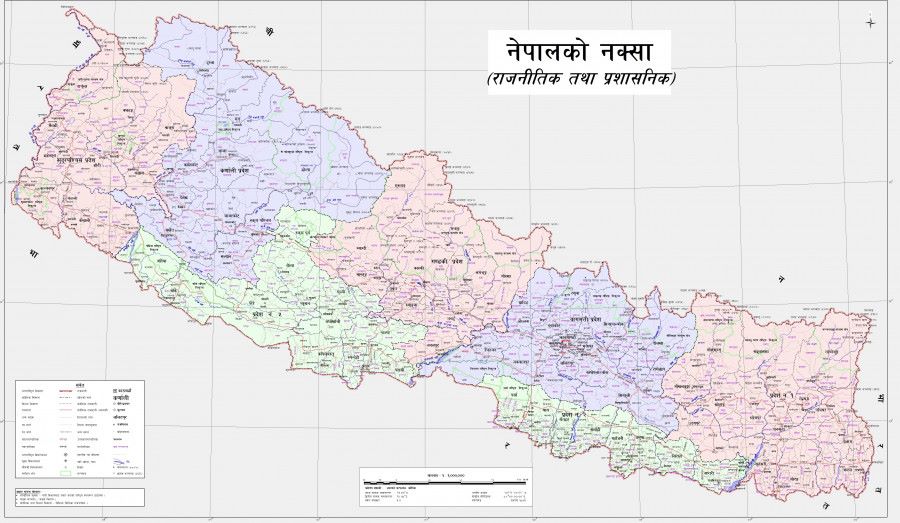
Nepal located between the two gigantic nations, China and India, with their fast-growing economy, is a small landlocked country encompassing a total size of 147,181 square kilometres with a population of about 29.2 million. Despite its richness in biodiversity, natural resources, and cultural multiplicity, it still lags behind in many aspects and is an emerging country where nearly 20 percent of the people live under the poverty line. The impact of poverty is seen in all sectors of the society as: health and hygiene, education, disaster and conflict preparedness, access to and distribution of resources, gender equity, as well as respect for humanitarian values.
Key Indicators for Nepal
| Total population (2021) | 29,192,480 |
| % of population under 15 years | 33.22 |
| % of population above 65 years | 5.13 |
| % of urban population | 66.08 |
| Population growth rate | 0.93 |
| Population density per sq. km. | 198 |
| Life expectancy at birth | 71.3 |
| Infant mortality rate per 1000 live births | 21 |
| Under five mortality rate per 1000 live births | 33 |
| Maternal mortality rate per 100 000 live births | 151 |
| Birth attended by skilled health personnel | 70% |
| One year old fully immunized against tuberculosis | 88% |
| One year old fully immunized against measles | 94.7% |
| HDI rank out of 193 countries (2025) | 145 |
| % of population living below national poverty line | 20.27 |
| Literacy rate for population aged 5 years and above | 76.2% |
| population using an improved sanitation facility | 95% |
| Number of doctors per 100,000 population | 120 |
Disability Situation in Nepal
Disability is prevalent across the world irrespective of gender, ethnicity, race, etc. In the context of Nepal, disability is viewed as a result of curse passed on from the previous births. People with disabilities are either pitted or ignored. The notion that people with disabilities have equal rights and duties as any other individual is largely absent from the popular mindset. There are no comprehensive data on disability in Nepal. Even the statistics on people with disabilities varies according to source. An estimated 16.6% percent of the people in Nepal is with disabilities of one form or another. The government of Nepal has classified disabilities according to the problem and difficulty in any organ or system of the body as: physical disability, disability related to vision, disability related to hearing, deaf-blind, disability related to voice and speech, mental or psycho-social disability, intellectual disability, disability associated with haemophilia, disability associated with autism and multiple disability. It has been found recently that Nepal has one of the highest incidences of deafness with the deaf and hard of hearing constituting 17% of Nepal’s population.
